
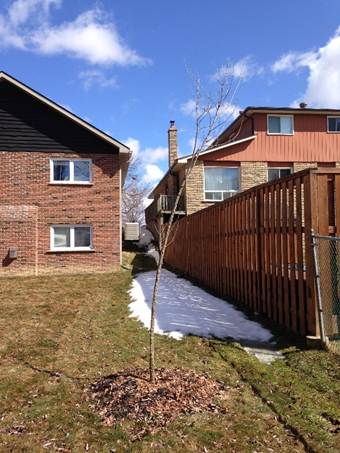
My tree isn’t leafing out.
This is a common concern among residents in early spring and often depends on the timing of “bud break” (when dormant buds crack open after winter) and species type. Air temperature is one of the most important factors in regulating bud break and leaf out times, so depending on the weather each spring (and keeping in mind that our changing climate is leading to shifts in short-term weather patterns), leaf out times can vary among and within species. In addition, different trees leaf out at different times depending on their anatomy and genetics. So, if one of your neighbour’s trees has started to leaf out and yours hasn’t, don’t fret just yet! Keep these external factors in mind and give your tree some time to break out of dormancy.
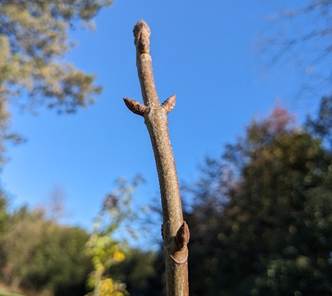
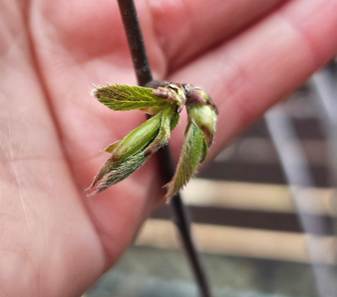
Left Photo: © 2025 Adam James / LEAF Right Photo: © 2025 Brenna Anstett / LEAF
To support the leafing out process, we recommend watering regularly (once the ground thaws and the spring melt dries up): two to three times a week for 15 minutes on a slow trickle around the base of the tree. We also recommend adding a healthy layer of organic compost (about one to two centimetres deep) underneath a layer of natural mulch (about one to two centimetres deep) in a doughnut shape around the trunk, taking care not to let the compost or mulch touch the trunk, as this can promote rot. For additional care tips, check out the Tree & Shrub Health & Care page on our website.
My tree isn’t growing.
This is another popular concern among residents with newly planted trees. In the first few years after planting, trees expend most of their energy on growing underground, establishing a strong root system. As a result, canopy growth is much slower on a newly planted tree than it is on one that has been in the ground for longer. Upper growth generally begins a couple of years after planting, so with time and care, your tree should flourish!
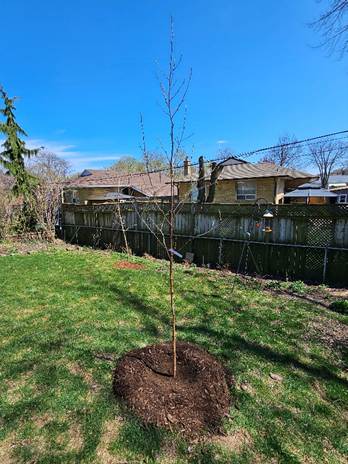
© 2025 Brenna Anstett / LEAF
My tree is leaning.
A tree’s root growth during the first few years after planting is stimulated by the tree’s movement in the wind aboveground, which is crucial for proper structural establishment and long-term stability. However, a tree may begin to lean following heavy winds or under the weight of snow and ice. Luckily, trees are very flexible and naturally strengthen when they move in the wind, weather the elements and grow with the sunlight.
When a tree is staked, especially incorrectly, its movement in the wind becomes restricted, which can inhibit the important and necessary root growth needed to anchor the tree long term. That said, in some situations, staking can help keep the tree upright while the roots establish, but only in certain environments and only if done properly. For more information on proper staking, please check out the Tree & Shrub Health & Care page on our website or our blog on staking young trees. If you have concerns about a leaning LEAF tree, please contact us, and we will have one of our arborists assess the situation!
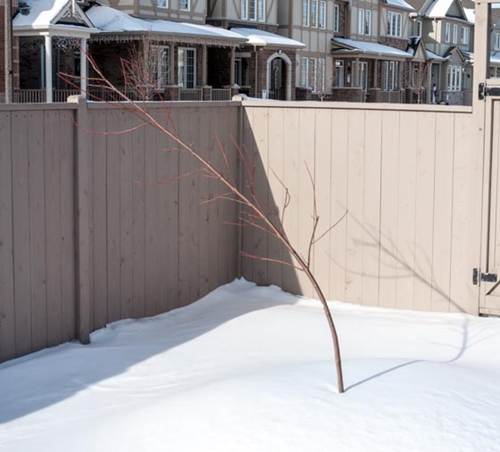
Left Photo: © 2014 LEAF Right Photo: © 2015 Lisa Moore / LEAF
My tree has sprouts coming out at the base of the trunk.
This is called “epicormic growth,” which happens when new stems and leaves arise from dormant buds beneath the bark, often near the base of the trunk. Epicormic growth is often stimulated by stress or damage, such as sudden environmental changes, crown dieback, heavy pruning, root dieback, changes in water availability or changes in temperature. The resulting leaves are often larger than those in the canopy because the tree needs to gain as much energy from the sun as possible to conduct photosynthesis (a tree’s food-making process) to improve overall health. The greater the leaf surface area, the more energy gained, making it easier for the tree to bounce back from stress!
So, if you see epicormic growth at the base of your tree, don’t prune the shoots — they aid in food production and increase resilience. Instead, continue to care for your tree as prescribed on the Tree & Shrub Health & Care page of our website. Once your tree regains a healthy canopy, the shoots can be pruned.
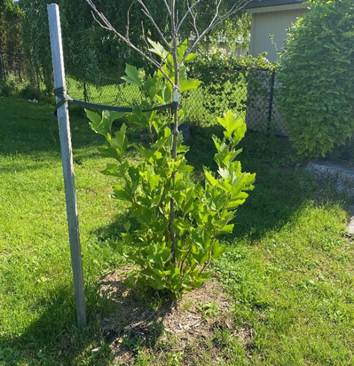
© 2022 LEAF
My tree has tiny, raised bumps on its leaves.
These are called “galls,” which are abnormal growths of swollen plant tissue, often found on the leaves, stems or branches of trees. Most galls are caused by the irritation of plant cells due to feeding by insects such as aphids, midges, wasps or mites. While sometimes unsightly, galls are often cosmetic in nature and will not cause significant damage to your tree. They may fluctuate in presence from year to year depending on weather, plant susceptibility and insect populations. If left alone, they are usually kept under control by their natural enemies or phase out with age. If you have galls on your tree, don’t spray it with a chemical pesticide — it isn’t effective, and it may kill beneficial insects that could help control the galls naturally. The best thing to do is to provide care as prescribed on the Tree & Shrub Health & Care page of our website.
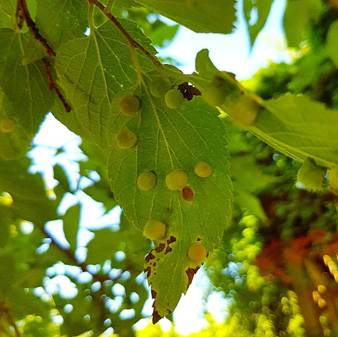
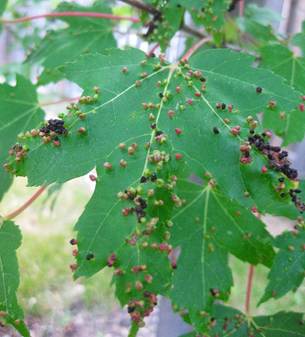
Left Photo: © 2019 Adriana Rezai-Stevens / LEAF. Right Photo: @ 2015 Brenna Anstett / LEAF
With spring upon us, if you have any concerns about trees you’ve planted through LEAF, please don’t hesitate to fill out our Request for Arborist Advice Form, and one of our arborists will be in touch!
Brenna Anstett is an ISA Certified Arborist and the Residential Planting Programs Manager at LEAF.
LEAF offers a subsidized Backyard Tree Planting Program for private property. The program is supported by the City of Toronto, the Regional Municipality of York, the City of Markham, the Town of Newmarket, the City of Vaughan, the Regional Municipality of Durham, the Town of Ajax, the Municipality of Clarington, the City of Oshawa, the City of Pickering, the Township of Scugog and the Town of Whitby.