
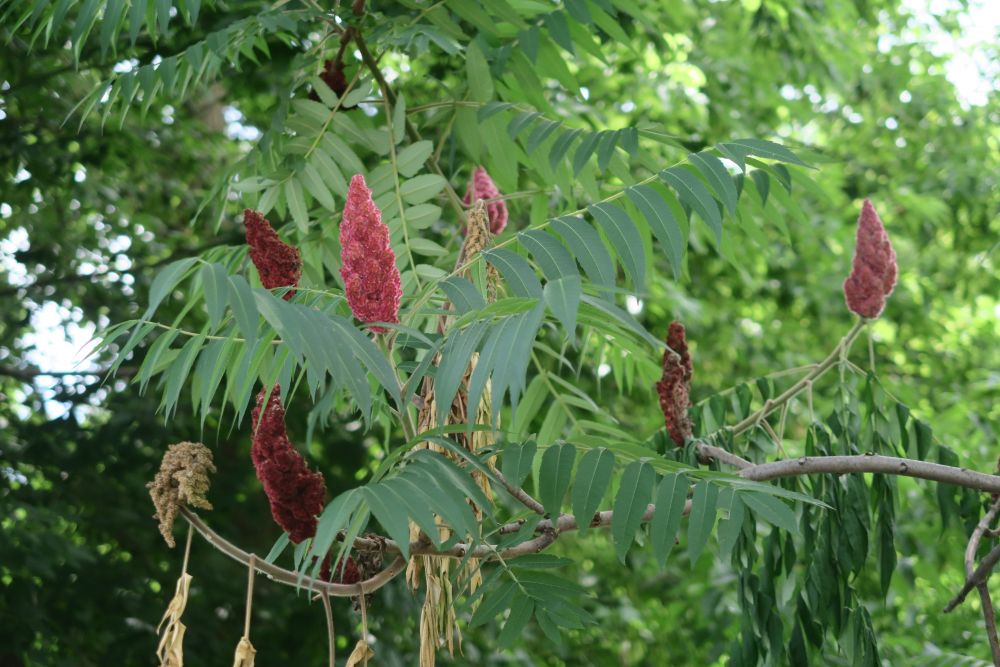
The fruit of the staghorn sumac has a lemon flavour and can be eaten like trail mix, made into a jelly, or used to make a lemonade-like drink.
About 30 people joined me and my fellow hosts, Melisssa Williams from LEAF, Dayna Laxton from The Regional Municipality of York, and Sydney Havenga from York Region Food Network, for a guided walking tour. Together we embarked on a journey to uncover delicious treats in unexpected places weaving through historic downtown Newmarket. We shared our knowledge and learned from each other about the healthy and delicious food growing on trees that we may be passing by every day!
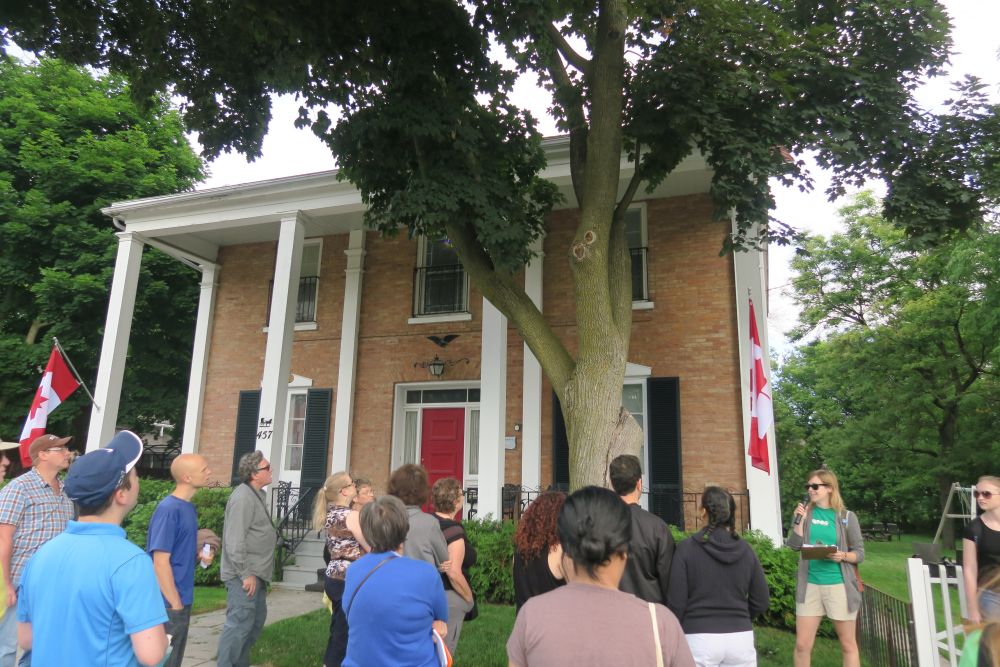
Melissa discusses the difference between Norway and sugar maples.
Throughout the tour, leaders shared tips on tree identification and pointed out the edible parts of various species. Participants learned about historic uses of plants and got ideas on how they might accent their own meals with treats from the urban forest today.
We were reminded that we should not forage or remove plants (or parts of plants) from natural areas, ravines, conservation areas or parks. There are simply too many people using these areas and removing plants can be very damaging to the ecosystem. Our focus was on trees and shrubs along streets and in backyards. Participants were encouraged to plant the species they want to forage from in their own yards.
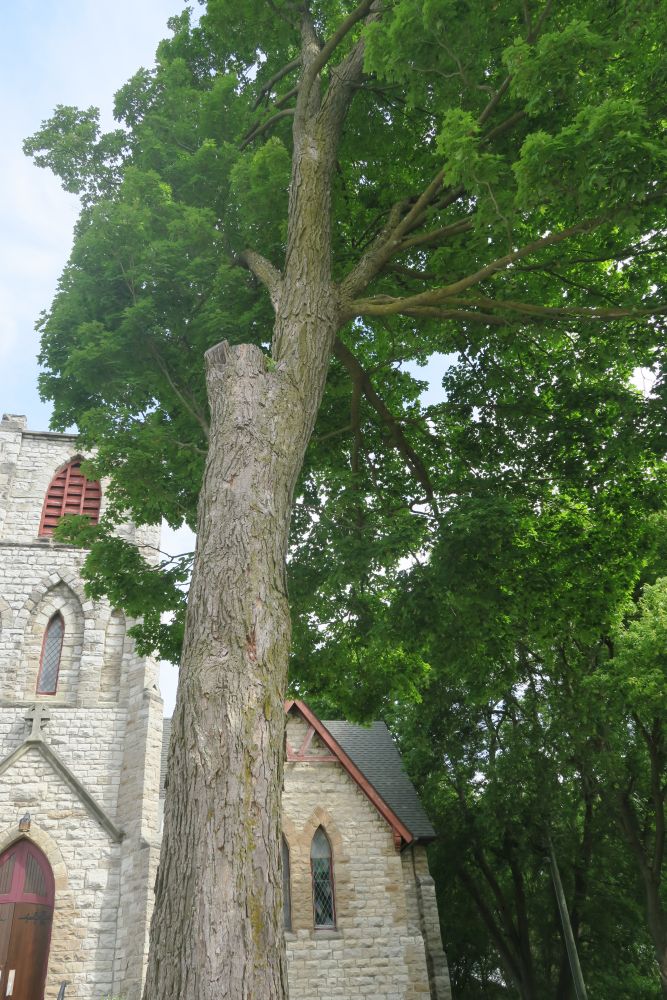
Sap from the sugar maple tree is used to make the maple syrup we enjoy on our pancakes at breakfast. It takes 40L of sap to make 1L of syrup.
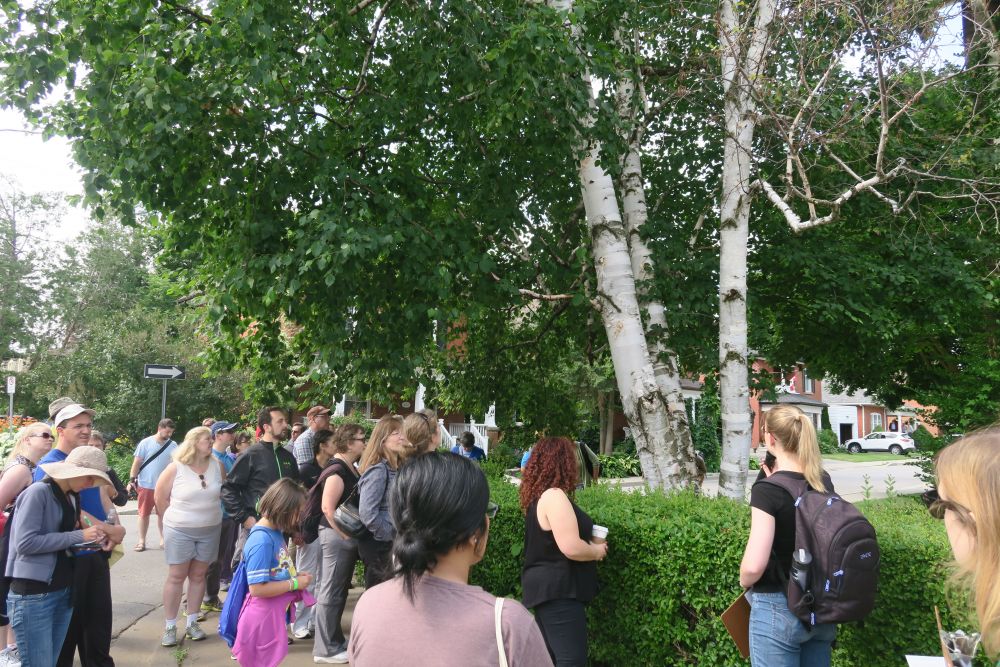
Sydney explains the edible properties of the paper birch tree.

Tour participants and I admired this young red oak tree while discussing acorns!
Here are my top five highlights from the tour and what I learned from my co-leaders:
1. Did you know that maple trees aren’t the only ones that can be tapped for syrup? Black walnut and birch trees can also be tapped and produce delicious syrups that are gaining popularity worldwide! It is argued that white birch trees produce the best tasting syrup with hints of honey, caramel and liquorice. Black walnut syrup is usually sweet and nutty in flavour. YUM!

The beautiful black walnut tree I got to highlight!.
2. A variety of native trees are known to have traditional medicinal value. For example, the resin, needles and inner bark of the white pine tree were used to treat coughs while the inner bark of red oak tree was used to treat digestive disorders, skin infections, and respiratory disease. In fact, today’s commercial cough syrups contain active ingredients derived from white pine trees!
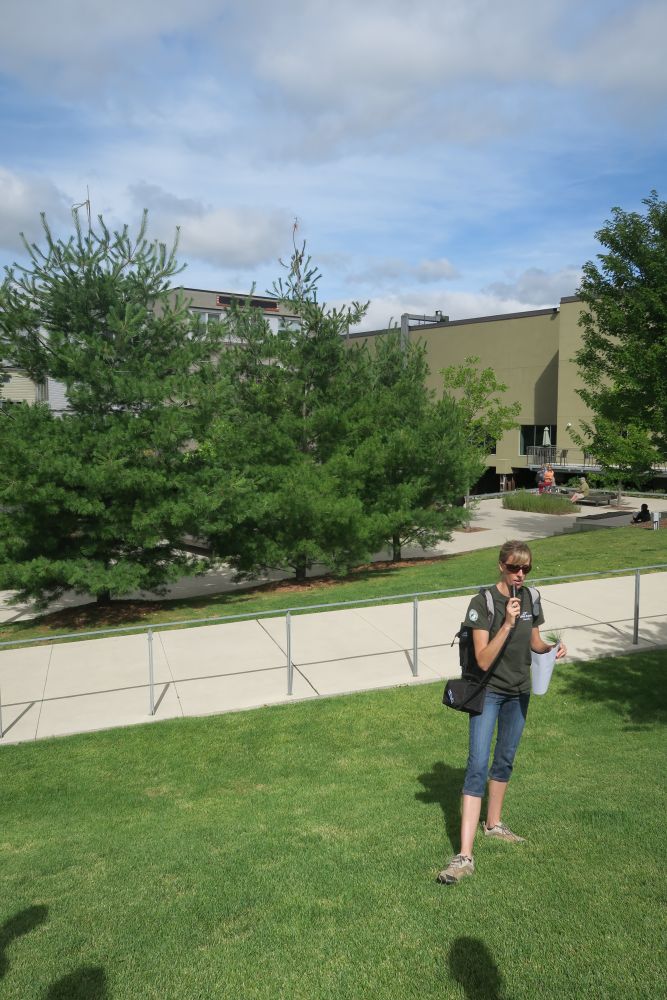
Dayna explains how you can identify a white pine tree by counting five needles in each of its bundles.
3. In addition to having delicious edible berries in early summer, serviceberry trees are also great for planting in new developments as they are very hardy! It is one of many native trees available through LEAF’s Back Yard Tree Planting Programs!
4.The gingko tree is the oldest tree on earth! This tree is approximately 200 million years old and dates back to the Jurassic period, which means it still resembles the same tree that Tyrannosaurus Rex would have been familiar with! Gingko nuts are said to have a rich, creamy flavour. Traditionally in Japan, they are barbequed and enjoyed with cold beer or sake! The young leaves are also eaten in salads.
5. We were introduced to a beautiful maple tree, which was planted in memory of an American elm taken down in the 1940s. The historic elm tree was used as a trading post and landmark for the “new market”, hence the town’s name, Newmarket!

Dayna introduced the site of the historic elm tree.
The tour ended with participants gathering at the Newmarket Farmers Market to sample delicious edible treats made from trees, such as maple butter and jellies made from Canada plum, cedar, and elderberry.
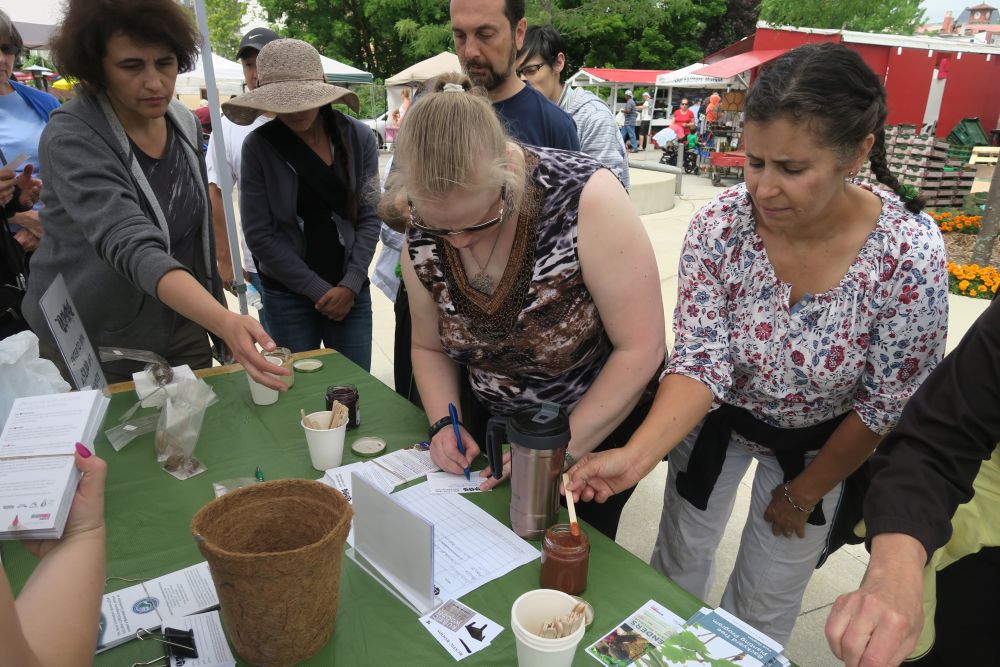
Tour participants taste some edible tree treats!
Special thanks to our volunteer Tour Assistant, Stacie Reid, and volunteer Outreach Assistants, Michelle Poon and Glenn Abuja.
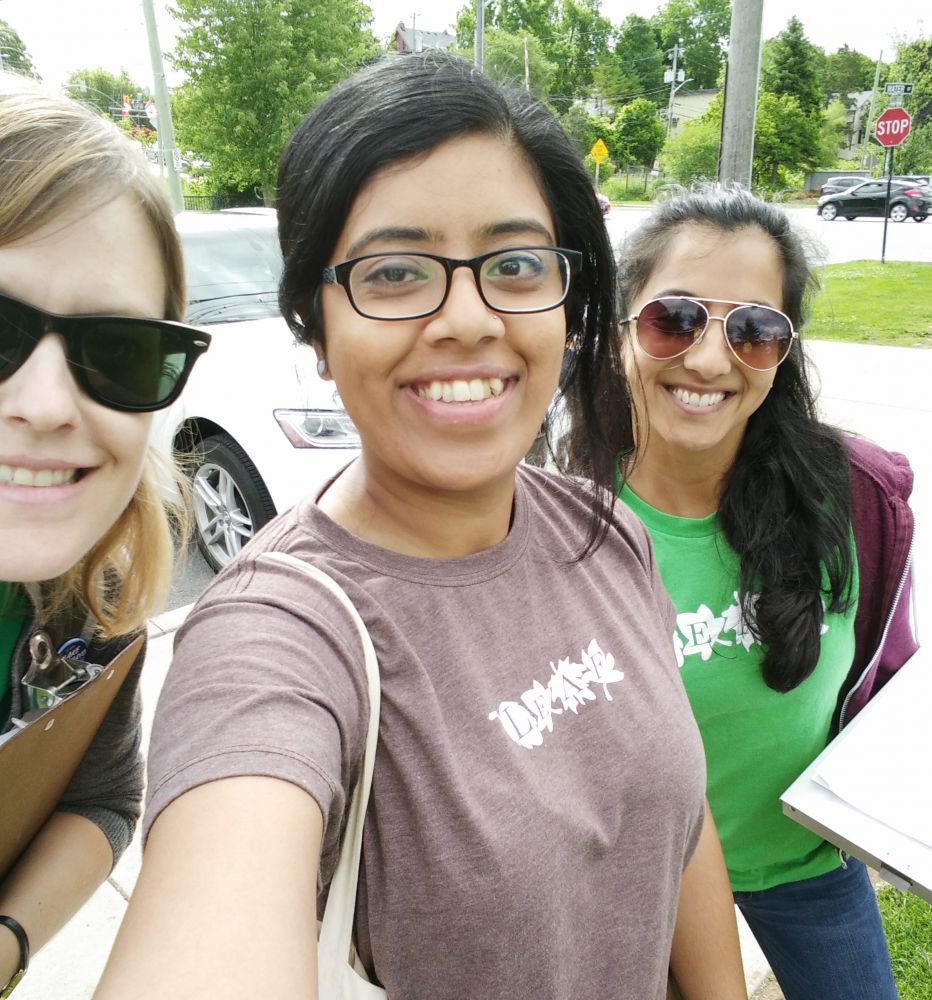
Photos of the Edible Tree Tour were taken by Natasha Keshavjee and Tooba Shakeel.
Tooba Shakeel is LEAF’s Education and Outreach Coordinator.
LEAF’s Tree Tours are supported by York Region.