
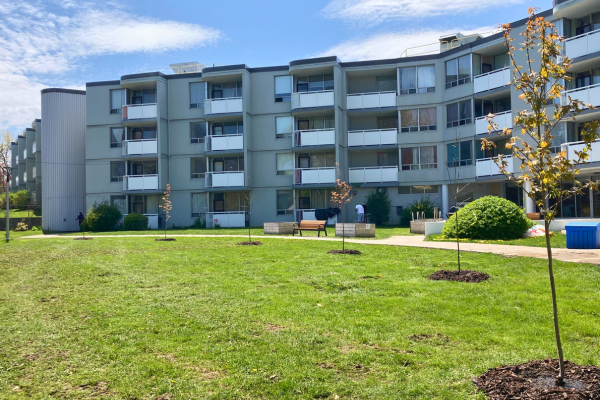
While parks and boulevards are important spaces for tree planting, planting trees on public land is only one part of the urban forest equation – private property also plays a critical role. In a city such as Toronto, nearly half of all households are renters, yet tenants cannot alter landscaping without landlord approval. But by engaging landlords in an informed, practical way, tenants can help bring tree planting to life!
By clearly framing the benefits of well-planned trees and taking the lead on coordination and care, tenants can become facilitators in planting trees, bringing lasting ecological and property benefits to the places they call home. Here are five ways renters can encourage their landlords to say Yes! to tree planting.
1. Start by Explaining How Trees Benefit the Property
When strategically planted and cared for, trees become long-term assets that benefit landlords and their properties. A well-placed tree can:
- Reduce utility bills by cooling buildings with natural shade in summer or warming buildings by blocking cold wind in winter.
- Protect building infrastructure (e.g., roofing) from heat-related wear.
- Enhance curb appeal and improve tenant retention.
- Increase long-term property value as the tree matures.
- Prevent costly damage to property infrastructure from flooding and soil erosion by absorbing stormwater runoff and stabilizing soil with roots.
Keep in mind that to maximize these benefits, trees need to be planted in the right place (more on that below). This is one of the many ways that LEAF can help!
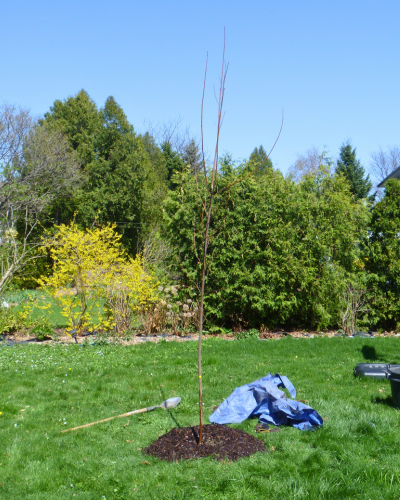
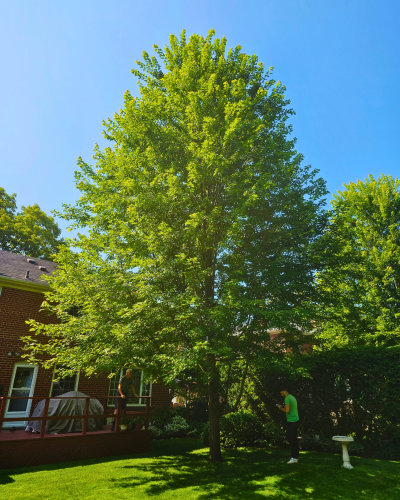
Tenant tip: Before approaching your landlord, review LEAF’s minimum spacing requirements chart and our blog on tree spacing to confirm there is suitable room for a tree. You may also find it helpful to read our blog addressing common misconceptions about tree roots and the risk of pipe or foundation damage. If you and your landlord move forward with a consultation, the arborist will confirm the safest and most appropriate planting location.
2. Recommend LEAF’s Tree Planting Program with Subsidized Pricing and Expert Support
Tree planting can often feel like a significant upfront investment for property owners. One of the most effective ways to ease landlord concerns is to show that LEAF’s subsidized pricing covers far more than the tree itself. Through the Full-Service, Do-It-Yourself(DIY) and Multi-Unit, Commercial & Institutional (MCI) planting programs, each tree comes as part of a bundled package that includes:
- A five-to-eight-foot native deciduous tree or a two-to-four-foot native evergreen tree.
- A consultation with an arborist certified by the International Society of Arboriculture.
- Delivery.
- Full planting service or online education videos to teach you how to plant the tree yourself.
- Mulch and a planting and care guide.
- Ongoing advice through seasonal e-mail tips, follow-up visits and answers to tree health and care questions.
LEAF’s bundled approach simplifies the process. For landlords, this is a big win, as it reduces both upfront costs and the logistics burden!
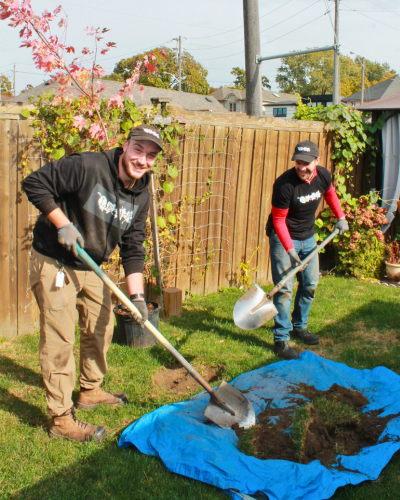
Tenant Tip: Emphasize that purchasing a similarly sized tree from a nursery, arranging delivery and hiring a professional for proper placement and planting would typically cost significantly more and require coordinating multiple services.
3. Choose the Right Tree: Native Species that Last
One of the highest hidden costs of landscaping is treating and replacing trees that were never well-suited to the site. Trees have distinct preferences for growing conditions, including light, soil type, moisture and climate, and when these are not met, trees become stressed and more vulnerable to threats.
To give trees the best chance of surviving and thriving long term, LEAF matches trees to the growing conditions on your property and only plants native species. Native trees are naturally adapted to local climate, soil and wildlife, making them a sustainable choice for properties.
Native trees that are properly matched to their site are more likely to:
- Tolerate common pests and diseases.
- Require less ongoing maintenance once established.
- Withstand seasonal weather changes, including freeze/thaw cycles.
- Avoid premature death.
During a consultation with LEAF, a LEAF arborist will evaluate the unique growing conditions on your property and provide a personalized shortlist of native species suited to those exact conditions.
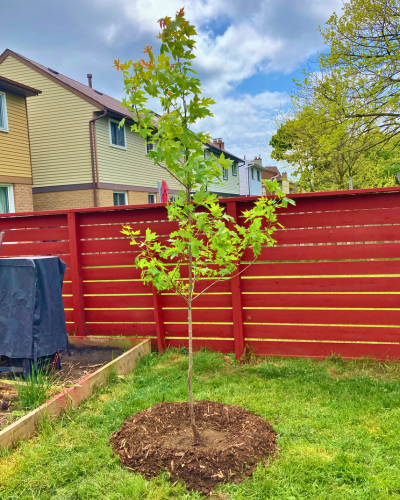
Tenant Tip:Treat the consultation as a shared planning step. The tenant and/or the landlord can attend the consultation to guide the arborist’s final recommendations. It’s helpful if both parties agree in advance on the location, size expectations and any preferred characteristics (e.g., interesting bark or flowers). Putting these details in writing helps ensure a clear, shared understanding.
4. Choose the Right Place: Safe Spacing & Professional Planning
Even well-chosen native trees need sufficient space to grow. One of the most valuable parts of LEAF’s planting program is translating technical spacing and infrastructure considerations into a clear, site-specific planting plan that both tenants and landlords can trust. During the consultation, the LEAF arborist identifies locations where the tree has enough room to grow below ground for root development and above ground for crown development.
Planting the tree in the right place gives it a better chance of surviving and thriving into maturity and allows it to integrate safely into the property and remain a low-risk, long-term asset.
Safe placement entails:
- Adequate distances from foundations, fences, hard surfaces and other trees to ensure roots and canopy can develop while avoiding potential future conflicts.
- Placement in areas with sufficient soft ground space to ensure roots have adequate soil volume to develop properly and anchor the tree over time.
- Distance from underground utilities like gas or electrical lines to avoid damaging them during planting. Utilities are verified through an Ontario One Call Locate Request submitted by LEAF or the property owner, depending on who is doing the planting. Property owners disclose any privately installed buried lines like irrigation, so these can be safely avoided.
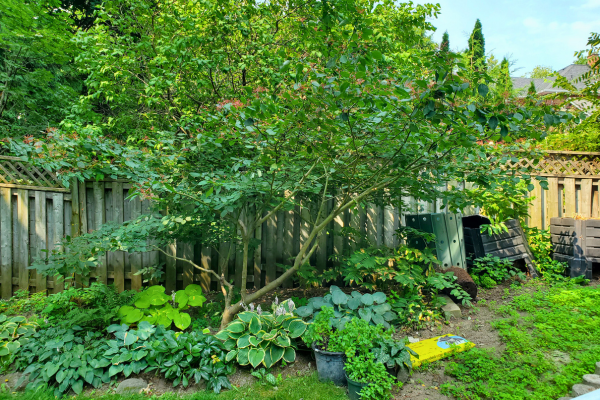
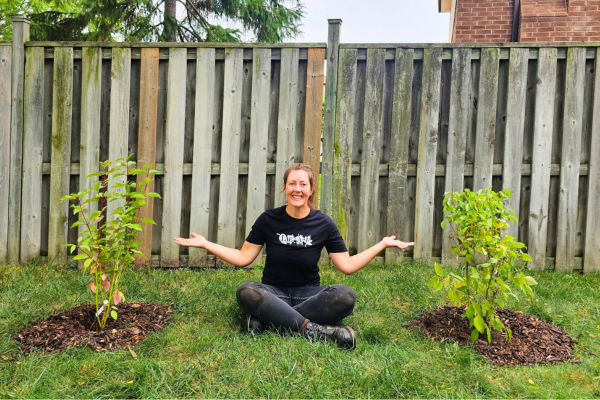
Tenant tip: If your landlord is still hesitant, consider starting with a single, small-growing tree or a few shrubs. Seeing how carefully the process is planned often helps build confidence and opens the door to future planting.
5. Offer to Take the Lead on Early Care
The first few years after planting are a critical period of adjustment as the tree settles into its new environment. During this time, it is most vulnerable to transplant shock and relies on regular care to develop strong roots. Early care is a short-term effort that yields long-term rewards, allowing the tree to flourish into a healthy, mature addition to the property over time.
Regular care involves:
- Maintaining a layer of undyed, natural mulch and organic compost in a doughnut shape around the tree.
- Regular, twice-weekly watering during the first two to three years after planting.
- Protecting the tree from animal or mechanical damage.
- Avoiding the use of chemical fertilizers and pesticides around the tree.
But don’t worry, you don’t have to take this on all on your own – LEAF is here to support you as you become a confident steward! We provide a planting and care guide and ongoing advice through seasonal e-mail tips, follow-up visits and answers to tree health and care questions. LEAF also offers an optional Five-Year Maintenance Package to get your LEAF tree on the right track.
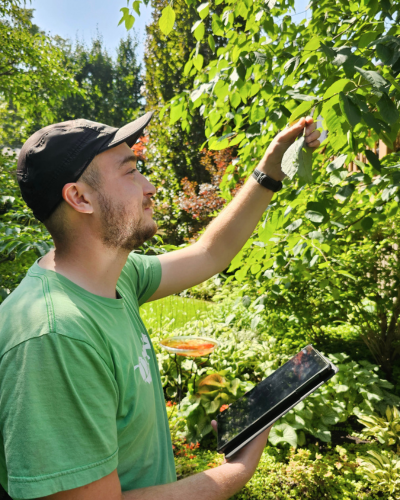
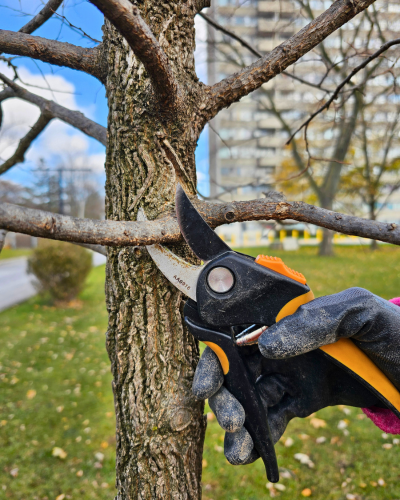
Tenant tip: Landlords in Ontario are not responsible for routine tree care unless a safety hazard develops. Check your lease agreement and, if appropriate, offer to take the lead on watering and early care. Showing that you are prepared to support the tree can help build trust and make landlords more open to moving forward.
Ready to plant with us? Visit LEAF’s Planting on Private Property page to explore options for planting trees and shrubs on your rental property and take the first step toward growing a lasting canopy where you live!
Amba is LEAF’s Residential Planting Program Assistant.
LEAF offers a subsidized Backyard Tree Planting Program for private property. The program is supported by the City of Toronto, the Regional Municipality of York, the City of Markham, the Town of Newmarket, the City of Vaughan, the Regional Municipality of Durham, the Town of Ajax, the Municipality of Clarington, the City of Oshawa, the City of Pickering, the Township of Scugog and the Town of Whitby.