
This conversation moves between past and future, tracing the early days of LEAF while exploring the ideas, challenges and hopes emerging from the next generation of urban forest stewards.
Seeing the Opportunity
When Janet McKay founded LEAF in the mid-1990s, the language of “urban forestry” was not yet commonplace. But the need was already visible to her. “I was looking around my neighbourhood and noticing something that felt like a gap,” she recalls. “There were programs that helped plant trees on city property in front of homes, but there were all these backyards with space and no support for planting.”
What would eventually become LEAF began as a simple idea. Janet launched a sapling distribution project, offering free native trees to residents. The response was overwhelming — the trees were snapped up quickly. But when she returned later to see how they were doing, the results were mixed. “I saw trees planted too close to houses, trees needing full sun planted in shade, trees still sitting in pots on porches,” she says. “That experience really shaped everything that came after.”
The lesson was clear: planting trees was only part of the solution. Ensuring they thrived required knowledge, care and long-term stewardship. “That’s where our core principle came from,” she explains. “Right tree, right place, right care.” Three decades later, that idea still guides LEAF’s work.
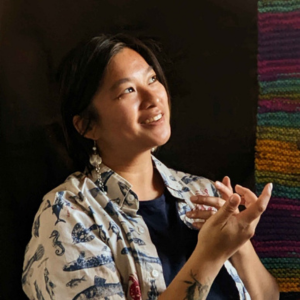
Similarly, long-time LEAF community member Dany Ko, who has been one of LEAF’s Young Urban Forest Leaders and worked as a tree planter through our Backyard Tree Planting Program, also noticed a “gap,” though from a different angle. Reflecting on their own path into the environmental field, they spoke about the barriers many people – particularly marginalized populations – face in accessing these spaces and the importance of creating more inclusive entry points so more people can participate in, lead and shape the future of environmental work. With a commitment to enacting this change, Dany recently founded SCI AIDE (Science Communication Initiative for Accessibility, Inclusivity, Diversity and Engagement), an organization focused on making environmental and scientific spaces more accessible.
Growing Something from the Ground Up
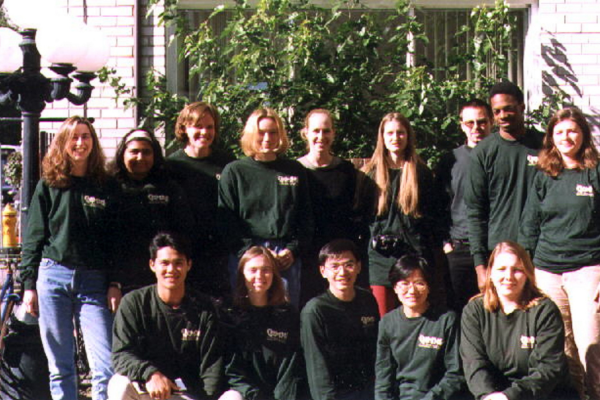
Like most nonprofit organizations, LEAF had humble beginnings, growing, shrinking, and continually evolving in its early years. “At first it was just me,” Janet says. “Then, suddenly, we got a federal youth employment grant, and I had to hire 15 youth. Then that funding ended, and it was back to just me again.”
LEAF operated under the umbrella of other nonprofit organizations before eventually incorporating independently. Each stage required flexibility and a willingness to experiment. Throughout these shifts, Janet balanced big-picture thinking with the practical realities of building an organization. That balance between imagination and pragmatism continues to shape LEAF today.
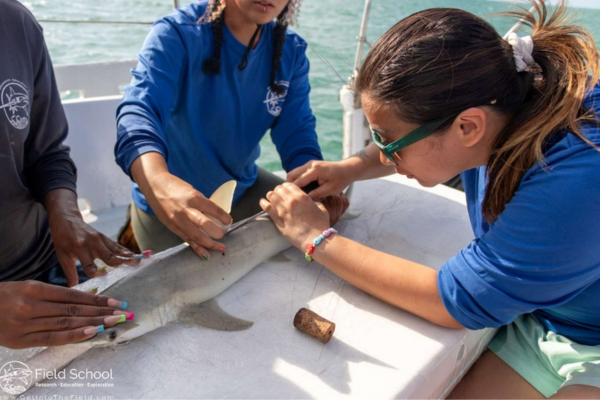
Dany is currently in a similar early stage of building, with SCI AIDE unfolding organically. In fact, the organization began unexpectedly after Dany raised funds selling art at a conference. “People started donating and saying, ‘You should start an organization with this,’” they recall. “I didn’t even have an organization yet.” Rather than dismissing the idea, Dany decided to try. “People believed in the possibility. So, I wanted to honour that trust.”
Since its inception, SCI AIDE has been supporting youth-led science communication projects and creating opportunities for historically marginalized young people to engage in environmental work.
Dany’s own experiences entering the field continue to be a driving force behind the organization’s work. “There are still a lot of barriers,” they say. “But if I’m experiencing those barriers even with education and connections, I can only imagine what others face.” Creating new pathways for engagement, they believe, is essential.
A Living Legacy
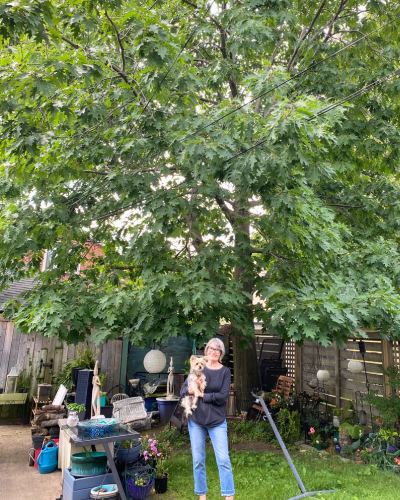
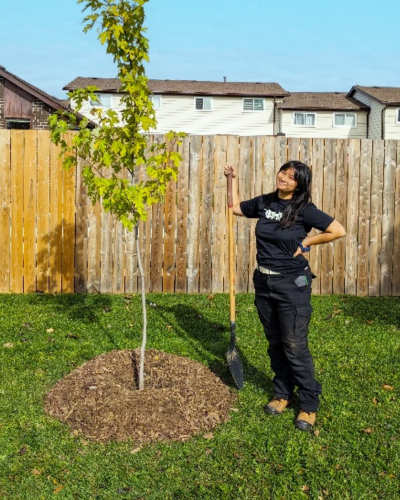
Few things illustrate the impact of LEAF’s work more powerfully than seeing LEAF-planted trees themselves decades later. Janet recalls visiting a homeowner in East York who had planted an oak tree through one of LEAF’s earliest programs. “It was massive. Healthy. Beautiful,” she says. “The homeowner loved it so much. Standing there with that tree, I remember thinking: this is what it’s all been for.”
For Dany, such moments also resonate deeply. “I remember seeing a tree someone said had been planted through LEAF 25 years ago,” they say. “It was towering. And the homeowner was so proud of it. I got emotional looking at it.” The connection between people and trees, Dany notes, is powerful. “You realize that someone planted that tree decades ago and cared for it all this time. That’s incredible.”
Seeds of Change
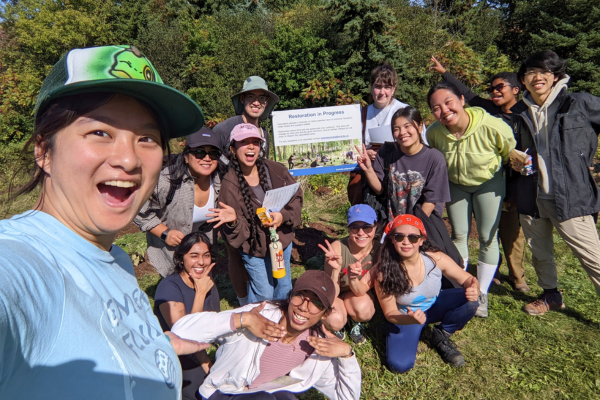
As LEAF looks ahead, Janet sees enormous potential. She points to growing interest in urban forestry, expanding youth engagement and increasing collaboration across communities. “I look at the young people coming into this field and I’m so excited,” she says. “They’re creative, thoughtful and incredibly capable.”
Dany shares that sense of optimism. “What gives me hope is that things are changing,” they say. “More people are thinking holistically about environmental work — about equity, about relationships, about community.”
LEAF: Looking Back and Growing Forward
30 years ago, LEAF began with a simple observation about untapped space in neighbourhood backyards. Today, the organization continues to grow through the relationships, ideas and actions of many people. And like the trees planted decades ago, the impact of those early seeds continues to expand.
LEAF’s future work will continue to focus on issues such as tree equity, ensuring that everyone benefits from urban forests, and strengthening partnerships with Indigenous communities. Most importantly, Janet hopes the organization continues fostering meaningful connections between people and nature. “In many ways,” she reflects, “what we really do is create opportunities for people to experience being part of nature.”
As we celebrate 30 years of growing urban forests and community stewardship, we’re also looking ahead to the next 30 years. If LEAF’s work has inspired you, consider supporting the 30 Years and Growing campaign and helping plant the seeds for the future of our urban forest.