
Invasive plants are non-native species that spread aggressively when introduced to new areas and cause environmental, economic and/or social harm. They are often introduced by human activity, sometimes intentionally and sometimes by accident.
The spread of invasive species can be managed through awareness, identification and removal. But what fills the void once they are gone?
Enter native species! Native plants have co-evolved with animals, fungi, other plants and abiotic materials, forming a complex network of relationships in the process. This interdependence helps create a healthy ecosystem that provides the ecosystem services we depend on, such as clean air, fresh water, biodiversity, pollination, flood protection, and food.
Below we discuss three common invasive species in Southern Ontario and offer some native species that make great alternatives.
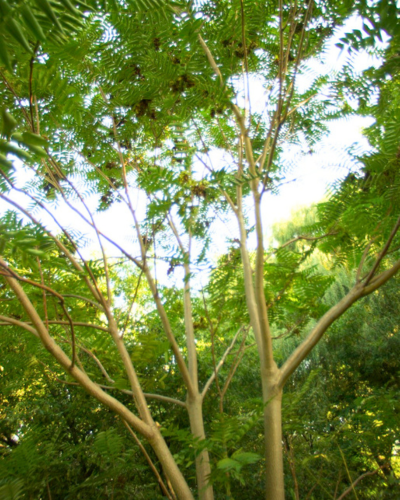
Tree of Heaven (Ailanthus altissima)
Tree of heaven gained popularity in North America due to its rapid growth, tolerance of urban pollution and resistance to native pests and disease. However, people who planted this tree soon discovered several serious drawbacks:
- It produces a strong, unpleasant odour when any part of the tree is crushed, earning it the nickname “stinking sumac.”
- It suckers, meaning it grows new shoots from its roots, often in response to injury or being cut down. New shoots can appear anywhere along the extensive root system, making tree of heaven incredibly difficult to remove.
- It is allelopathic, meaning it releases chemicals into the soil that make it difficult for many other plants to grow nearby.
- Its rapid growth results in weak wood that can break easily during storms or strong winds.
- It is the primary host for the invasive spotted lanternfly (Lycorma delicatula), providing the ideal habitat and helping the insect spread.
There are several native tree species that can offer similar benefits to tree of heaven but without these negative impacts. Trees such as basswood (Tilia americana) and hackberry (Celtis occidentalis) reach a similar size as the tree of heaven and provide dense shade while tolerating poor or disturbed soil.
For a smaller option, serviceberry (Amelanchier laevis) can be pruned into a single-stemmed form. It is hardy and adaptable to a range of soil conditions, with the added benefits of beautiful seasonal flowers and edible, nutritious berries!
Common Buckthorn (Rhamnus cathartica)
The common buckthorn has historically been planted because it quickly provides a dense privacy screen and requires very little maintenance. However, it also has some downsides that negatively impact local ecosystems in a few ways:
- It forms dense thickets that crowd and shade out beneficial native species.
- It has an advantage over native species by leafing out early in spring and keeping its green leaves longer than most other plants in the fall. This allows it to grow and spread for longer windows than other species.
- It can alter soil conditions in ways that increase erosion and make it easier for other invasive plants to take root.
- It produces an allelopathic chemical called emodin, which prevents the growth of neighbouring plants.
- Its berries are a diuretic for birds (and humans!), which helps spread the seeds quickly.*
The good news is that many native species provide the same privacy and low-maintenance benefits as common buckthorn! Shrubs such as common ninebark (Physocarpus opulifolius), nannyberry (Viburnum lentago) and red osier dogwood (Cornus sericea) can be grown into dense hedges and tolerate a range of growing conditions, making them excellent alternatives.
These native species also offer the added benefits of supporting wildlife, providing important ecosystem services and adding seasonal beauty to your yard with vibrant fall colours!
*For a deeper dive into common buckthorn, including how to identify it, how it spreads, its impacts and how you can address it, please check out LEAF’s “Buckthorn Problem” blog.

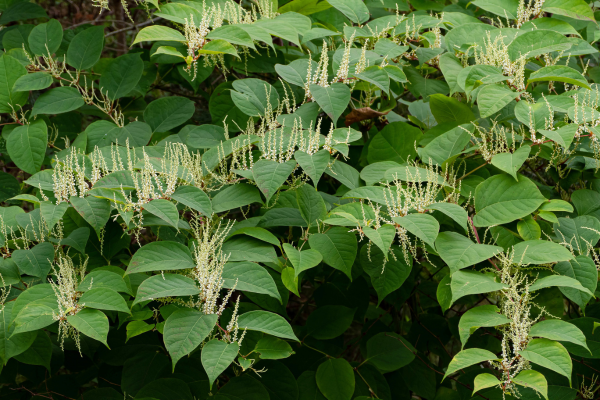
Japanese Knotweed (Fallopia japonica)
When it was first introduced to North America, gardeners and landscapers valued Japanese knotweed for its ornamental value, dense foliage and fast growth and spread. Although Japanese knotweed is smaller than both the tree of heaven and common buckthorn, it is no less problematic. Key concerns associated with this species include:
- It can spread quickly over large distances through rhizomes (underground stems) in its root system.
- It increases erosion, especially when it becomes established along riverbanks.
- It can regrow from even small pieces of stem or rhizome left behind after removal attempts.
- Its roots can aggressively spread into the preexisting cracks of older foundations or pavement causing damage.
For native shrubs with similar characteristics, we suggest elderberry (Sambucus canadensis), highbush cranberry (Viburnum trilobum) and grey dogwood (Cornus racemosa).

While tree of heaven, common buckthorn and Japanese knotweed were once popular choices for gardeners and landscapers for their fast growth, density and hardiness, we now know that they have been incredibly detrimental to the health of our urban forest, soil, riverbanks and biodiversity. Given their overall impact on our local ecosystems, the need for changes in planting practices is clear.
By choosing to plant native trees and shrubs, you can still reap the benefits that once made invasive species popular while also supporting local ecosystems, biodiversity and wildlife!
If you’re interested in planting a native tree like a hackberry or basswood in your backyard, LEAF can help! Our subsidized program makes planting native species easy, fun and affordable. Apply to the Backyard Tree Planting Program or contact us today to get started!
If the native shrubs we’ve mentioned have piqued your interest, we have you covered there, too! All our shrub species can be purchased individually or as part of our discounted shrub bundles. Choose between the Butterfly, Edible, Native Bee, Songbird, Privacy, Small Yard, Shade or the Create Your Own Bundles and receive four native shrubs delivered right to your door for only $100+HST! Every order includes mulch and a Planting and Care Guide, and themed bundles include a specialized fact sheet. Visit our Shrubs, Cedars and Pawpaws page to learn more and get started on your order today with our Shrub Request Form.
Joel S. is the Residential Planting Programs Field Assistant at LEAF.
LEAF offers a subsidized Backyard Tree Planting Program for private property. The program is supported by the City of Toronto, the Regional Municipality of York, the City of Markham, the Town of Newmarket, the City of Vaughan, the Regional Municipality of Durham, the Town of Ajax, the Municipality of Clarington, the City of Oshawa, the City of Pickering, the Township of Scugog and the Town of Whitby.