
Physical Health
Trees improve our physical health in many ways beyond just producing the oxygen we breathe. They also:
Improve the quality of the water we drink
Reduce our exposure to UV radiation
Combat noise pollution
Cool us and our urban environments
Remove harmful pollutants from our air
As a result, communities with healthy tree canopies are safer and healthier places to live. Cleaner air helps reduce asthma and respiratory issues, and cooler temperatures mean fewer heat-related health emergencies, in turn reducing the strain on our healthcare system. Cooler, quieter neighbourhoods also help us sleep better and encourage us to spend more time outside being physically active. Ultimately, trees improve our community health and act as preventive medicine by decreasing the likelihood and severity of health issues such as respiratory and cardiovascular disease, obesity and heat stress.

A person enjoying a jog along a shrub- and tree-lined path
Mental Well-being
The next time you are feeling stressed, try breaking up your day with a walk along a wooded or tree-lined path. Focus on your breath and notice any changes in your mood, as well as any thoughts or feelings that arise in the presence of trees. How do you feel afterward?
It turns out there is science behind that experience. Trees have been shown to lower cortisol levels, reduce heart rate and calm the sympathetic nervous system, which is responsible for the fight-or-flight response. This is all thanks to our evolution – we are wired to perceive natural spaces as safe, and our nervous systems respond accordingly.
Time in nature also gives our brains a break from the constant demands for attention in our urban environment and electronic screens. That mental break improves mood and emotional regulation and can reduce symptoms of depression. Studies have even found that education in natural settings can lessen the impact and frequency of ADHD symptoms in school-aged children!
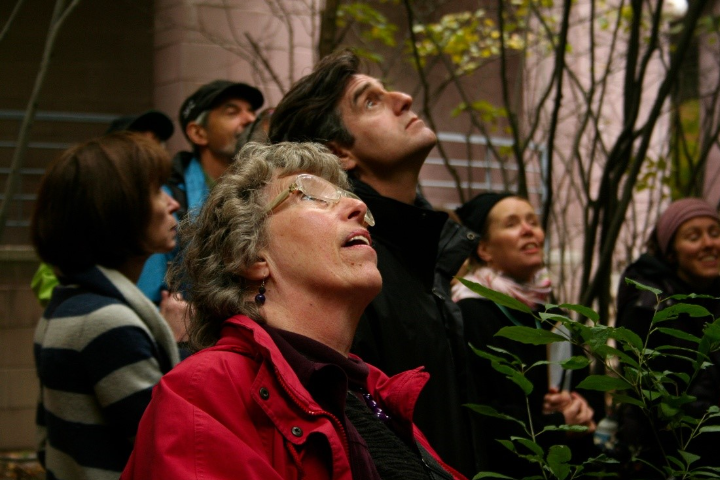
Participants on a LEAF tree tour taking in the canopy above.
© 2024 Kanchan Maharaj / LEAF
Community Connection
Trees bring people together. They make our public spaces look and feel more inviting, create comfortable places to relax, and lend beauty to shared outdoor spaces that communities can be proud of. But the benefits run far deeper. Research shows that when healthy, mature trees are present, neighbours are more likely to trust and connect with one another, residents feel a greater sense of belonging, feelings of aggression toward strangers decrease and parents feel safer letting their kids play outside.
Overall, healthy urban tree canopies help shape community identity and a sense of place, while also creating more opportunities for positive social interactions. In a time when trust, cohesion and belonging can feel hard to come by, caring for our urban forest is one meaningful way to rebuild them!
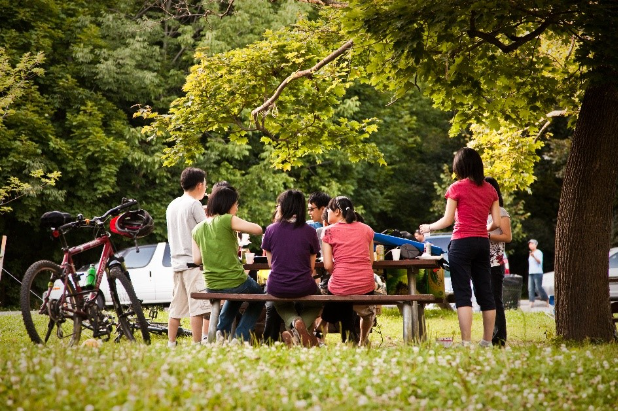
Group of people having a picnic at a picnic table, under a maple tree canopy at Downsview Park in Toronto.
The Bottom Line
The benefits of shade, clean air, and beauty that trees provide are widely acknowledged. But as we’ve seen, trees do so much more – for our bodies, our minds and our communities – and these benefits are far less appreciated than they should be.
By taking care of trees, growing the urban forest and ensuring healthy canopies, we are investing in our future health, resilience and the well-being of our society as a whole.
If you’re interested in planting a tree in your backyard, LEAF can help! Our subsidized program makes planting native species easy, fun and affordable. Apply to the Backyard Tree Planting Program or contact us today to get started!
Joel S. is the Residential Planting Programs Field Assistant at LEAF.
LEAF offers a subsidized Backyard Tree Planting Program for private property. The program is supported by the City of Toronto, the Regional Municipality of York, the City of Markham, the Town of Newmarket, the City of Vaughan, the Regional Municipality of Durham, the Town of Ajax, the Municipality of Clarington, the City of Oshawa, the City of Pickering, the Township of Scugog and the Town of Whitby.